
Sports
HFI Soccer Club — Vice President
Playing since Grade 2, I joined HFI Soccer Club and now serve as vice president, organizing matches and building team culture on the pitch.
Jacky Chen

AP Lang Portfolio · HFI 2025–26
Demis · HFI — South China Normal University Affiliated High School
From Zhanjiang to Guangzhou — soccer, stories.
Soccer vice president, weekly train rides to Zhanjiang.

From Zhanjiang roots to HFI
Personal narrative, values, and how I see myself at HFI.
Hi. I am Jacky Chen from Demis. Compared to my peers, who are mostly born and raised in Guangzhou, I was born in Zhanjiang, which is the western part of Guangdong, and raised there until I went to HFI to study. I almost go back home every week by taking the train for about five hours, which surprises most of my friends. Zhanjiang is not only my hometown but also a spiritual place for me, as I really miss my family and the delicious food there.
I really love soccer. I have been playing soccer since Grade 2, and I really love watching soccer matches when I have spare time. My favorite soccer clubs are Barcelona and Liverpool, and I really love Messi and Argentina. As a result, I attend the HFI soccer club when I get into HFI and become the vice president now.
I think I am a very humorous person, and I really love taking pictures of what I am currently doing. I think this way of taking the images is meaningful because I can remember what happened when I review these images or videos.
For the academy, I don't think I am very strong in it compared to my peers, who have tons of awards in both national and international competitions. I don't join many competitions like this, and I am going to attend the John Locke Competition in the international relations area. I hope I can get a great prize for this.
Philosophy
“Life is like a box of chocolates. You never know what you're gonna get.”
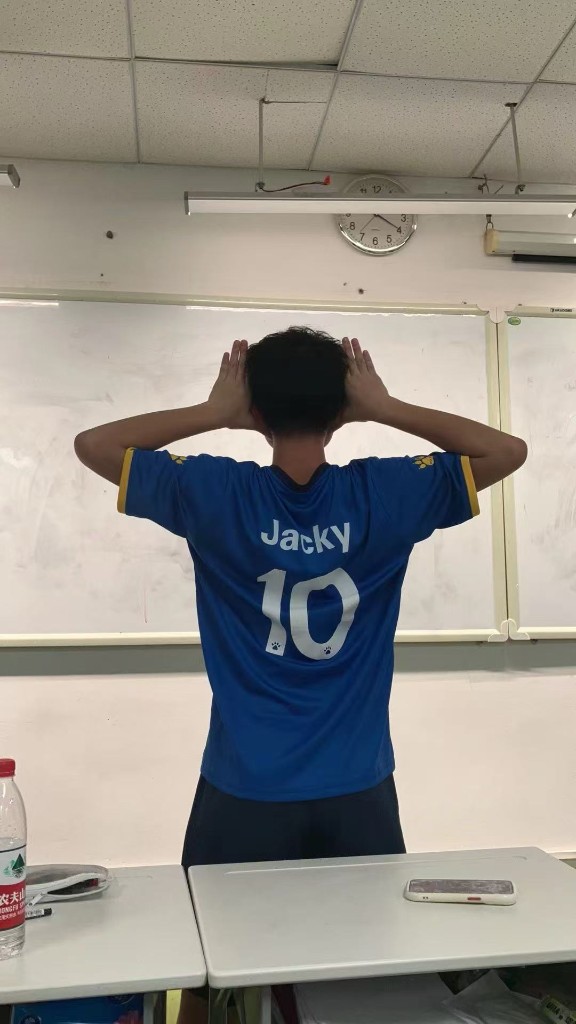
Weekly five-hour train rides between Guangzhou and Zhanjiang keep me grounded in family and hometown food.
Soccer taught me leadership as HFI Soccer Club vice president and humility as a lifelong Messi fan.
Photography is how I hold onto moments — street food, teammates, and late-night study breaks.
Growing up in Zhanjiang and studying at HFI pushed me to navigate Mandarin, Cantonese, and academic English daily — on trains, in essays, and on the pitch.
I position myself as a curious observer: humorous in conversation, reflective in writing, and always willing to revise.
Soccer leadership, community, and the journeys that shape me.
Playing since Grade 2, I joined HFI Soccer Club and now serve as vice president, organizing matches and building team culture on the pitch.
Team gatherings across the city — from turf under the Canton Tower to night matches under stadium lights.

Nearly every week I ride the high-speed train between Guangzhou and Zhanjiang — a five-hour ritual that keeps me connected to family.

Skewers, beef platters, and night-market meals — Zhanjiang flavors are my spiritual anchor away from home.

Classroom celebrations, signed jerseys.

Filming and gathering material for AP Lang Media Capstone Project.
Every image from my source folder — soccer, food, friends, and the train rides in between.
HFI Soccer Club team photo under the stadium lights.
Soccer gathering with the Guangzhou skyline in the background.
Weekly high-speed train tickets between Guangzhou and Zhanjiang.
Picking skewers at a Zhanjiang night-market stall.

Traditional beef platter — a taste of home in Zhanjiang.

Grilled skewers and cabbage at a local restaurant.
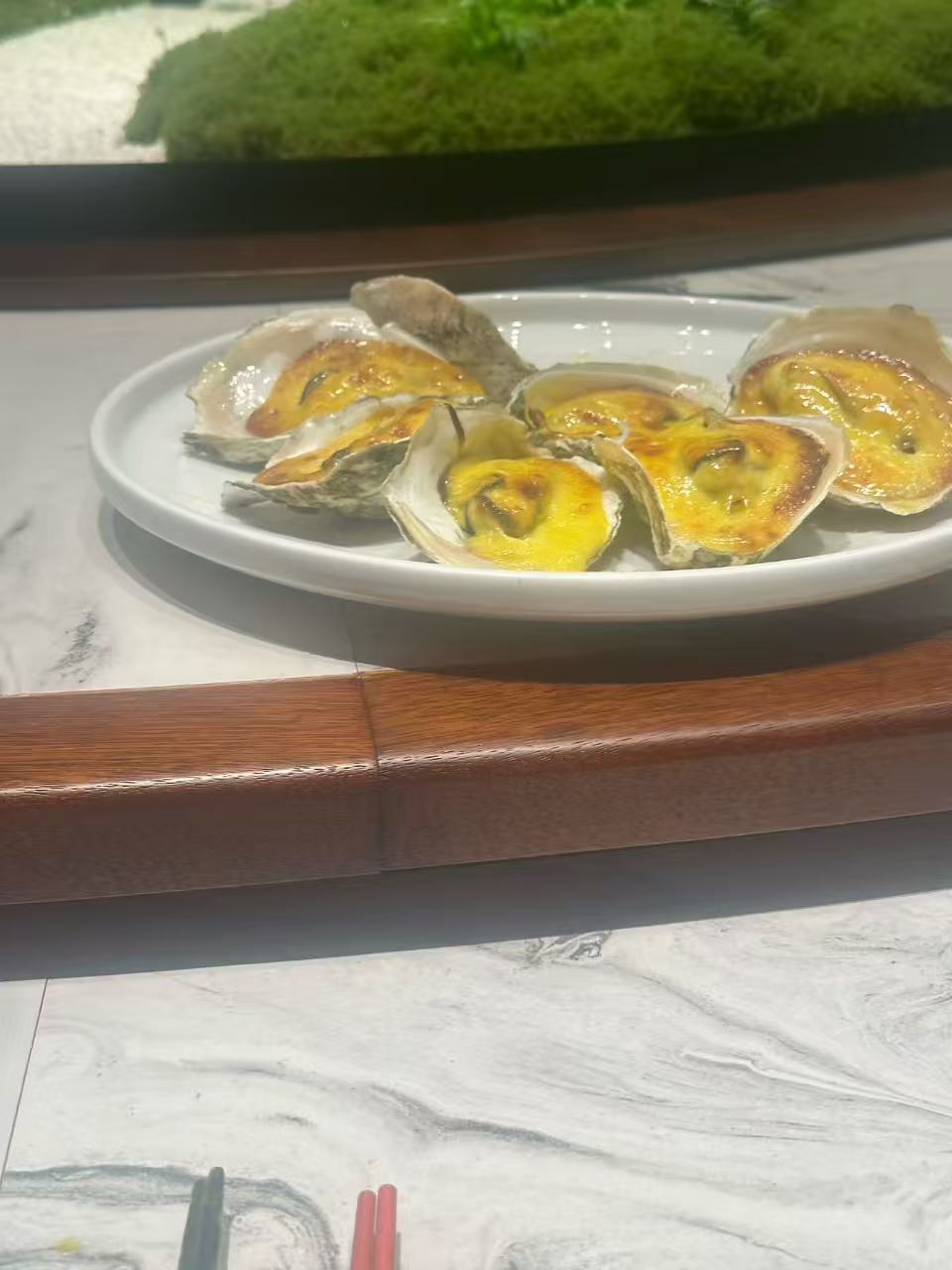
Baked oysters — another Zhanjiang food memory.

Roasted suckling pig at a family celebration.
Filming content for my AP Lang portfolio project.
Classroom celebration with friends and a signed jersey.
Late-night photo with classmates on the HFI campus.
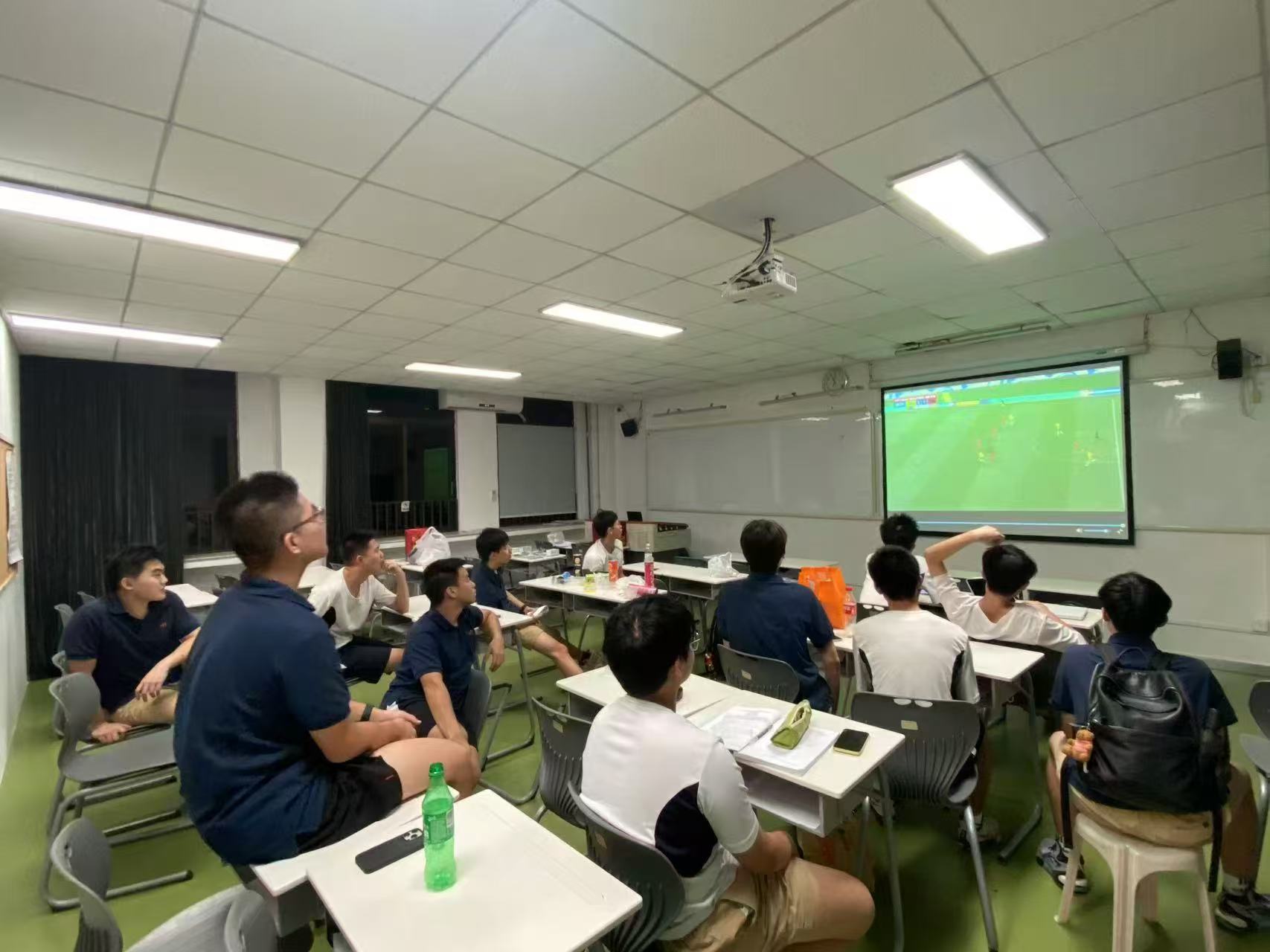
Watching a soccer match together in the classroom.
Mountain trip — headphones, cold air, and golden peaks.

At the LoL Worlds 25 backdrop in Chengdu.

Liverpool fans holding the banner: "It was always Liverpool."
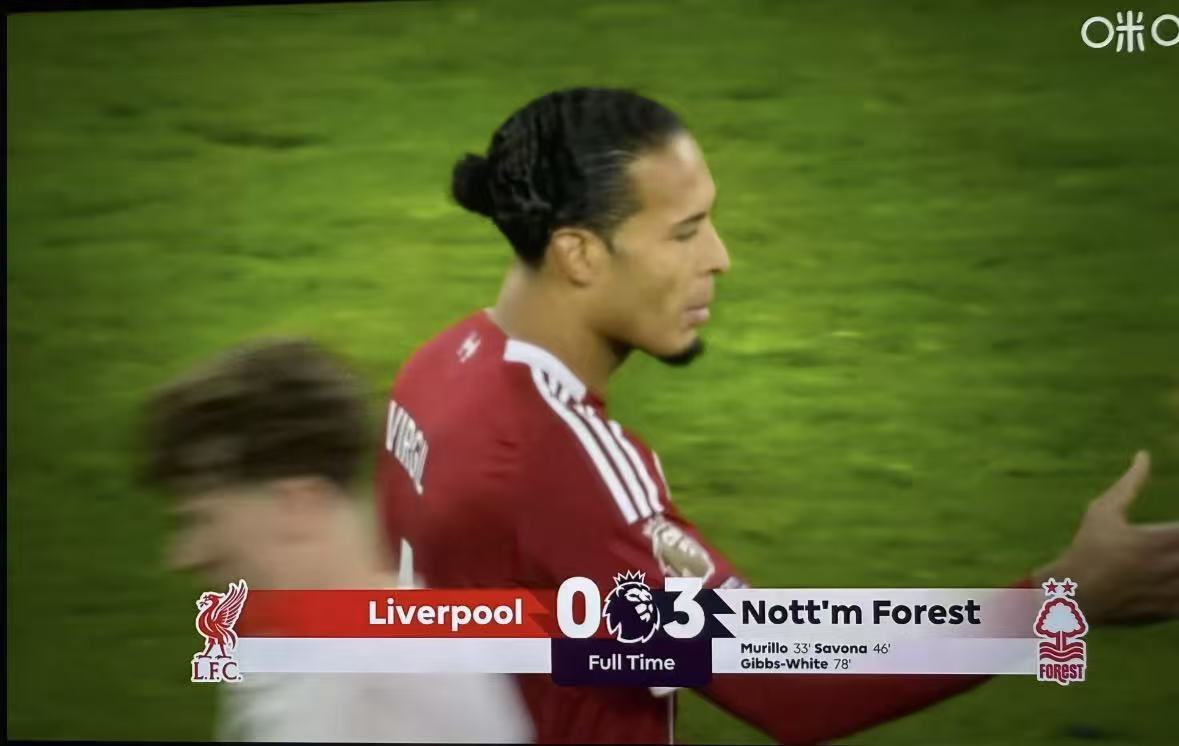
A tough Liverpool result — wins and losses both teach humility.

Champions League night — Liverpool vs PSG.
Mock 2 — Teiresias on pride, mistakes, and growth.
In the following excerpt from Antigone, by the classical Greek playwright Sophocles, the wise Teiresias observes

Think: all men make mistakes,
But a good man yields when he
Knows his course is wrong,
And repairs the evil: The only
Crime is pride.

Think about the implications of the quotation. Write an essay that argues your position on the validity of the assertion from the Antigone excerpt.

In your response you should do the following:
• Respond to the prompt with a thesis that presents a defensible position.
• Provide evidence to support your line of reasoning.
• Explain how the evidence supports your line of reasoning.
• Use appropriate grammar and punctuation in communicating your argument.

Write an essay that argues your position on the validity of the assertion from the Antigone excerpt.
While perfectionists argue that everyone should try their best to do everything, chasing the highest tier without making any mistakes, people should be allowed to make mistakes because making mistakes is an unavoidable thing in our journey and most people can grow up from admitting their mistakes.
While perfectionists argue that everyone should try their best to do everything perfectly, being perfectly will build up your confidence and allow you to be successful easier. It is true that many big names who successful in business or other fields once announced that they are perfectionists like Steve Jobs and Kobe Bryant. Nonetheless, these perfectionists never consider the following consequences once they fail. According to the conclusion from New York University, the perfectionists are less likely to confront the failures because they instinctly regard themselves as the best. From the experiments conducted by New York University, the researchers in NYU found that the perfectionists will be less likely to motivate themselves to success when they faced the difficulties. By contrast, people who are not the perfectionists will not feel disappointed as much as the perfectionists. As a result, they will be more likely to confront the difficulties and improve themselves. The different views of difficulties by the perfectionists and the non-perfectionists show their discrepancy toward the failures. Non-perfectionists have the lower expectation compared to the perfectionists, so they will not lose as much as confidence as well as the perfectionists do, implying that non-perfectionists are more willing to deal with the difficulties. In addition, the example of Cristiano Ronaldo also illustrates the point. Ronaldo is a typical perfectionist who try to make every possible goal become a real goal. However, when he gets older, his body does not support him to goal as much as his youth. Ronaldo never admits the fact that he is older now and he is not as strong and powerful as before. He does not want to be in the substitute in the consideration of his team. Finally, his team abandoned him. Ronaldo's experience underscores that people must admit their errors and change themselves to better suit in the community. Nonetheless, the perfectionists will not do that because they will never admit their errors and mistakes, thinking themselves as the best in all time. This proud attitude will easily destroy one's life by breaking up his relationship with others and the communities. Without changing themselves when facing the failures, like what Ronaldo did in Man United, these perfectionists will ultimately be abandon by others.
Making mistakes is a common thing in our journey of life and most people who admit their mistakes can learn from that experience, avoiding making the same mistakes again. The progress is made of the failure again and again. In 1912, the first year that the planes were invented, nearly half of the aviators would die when they had a flight. Black boxes were the record system that helped the scientists analyze the reasons for crashes of the planes. Therefore, with the help of black boxes, the scientists could promote their flight system, avoiding the same mistakes happened next time. The aviators who admitted their mistakes also learned from them, acknowledging that they made mistakes and were willing to change their behaviors to avoid it. With admitting the errors and the pursuit of change, the major airlines crashes drop significantly now, noticing that only one crash will happen in 8.3 million flights. This big success is aligned with the admission of errors. Without admitting the errors the aviators make, no innovative systems can be made for reducing the accidental rates. Furthermore, Messi' experience with losing the penalty can support that all men will make mistakes, but the difference of men is hidden in the way they treat the failure. In Copa America Cup, Messi lost a significant penalty in the Final, leading to Argentina lose the champion with Chile. Before the Final, Messi never lost the penalty over 30 games. The penalty lost did not break up with his own confidence, instead, Messi trained hard with learning a new way for kicking the penalty. Finally, in the World Cup 2022, Messi got 5 penalty and he did not lose any of them. Messi's experience showcases that everyone will make the mistakes even though Messi himself, who is regarded as the GOAT of soccer, the way Messi treated failure make himself unique. Instead of blaming the teammates or giving up the trainings, Messi preferred to train harder and avoided making the same mistakes in the future. This mentality in treating the failures led to the final success in the World Cup 2022.
Ultimately, the line between a "GOAT" and a failure is not defined by the absence of mistakes, but by the willingness to yield to them. While perfectionists like Ronaldo may achieve great heights, the complexity of maintaining success lies in the balance between confidence and humility. If one's pride is so strong that they cannot admit their own decline, they will eventually find themselves abandoned by the community they once led. Teiresias's warning is that pride acts as a barrier to evolution; just as the aviation industry would have remained stuck in the dangerous era of 1912 without the data from black boxes, individuals who refuse to "repair the evil" of their errors will remain stuck in their past glory. On a broader scale, the significance of this assertion is that the true "crime" of pride is that it stops progress. Whether it is a soccer player training for a penalty or a scientist analyzing a crash, the stakes are the same: those who acknowledge their wrong course can be more successful, while those blinded by pride will ultimately be left behind by the journey of history.
Mock 1 — Analyzing Hope Jahren's prologue.
The following passage is biologist Hope Jahren's prologue to her 2016 memoir Lab Girl. A prologue is an introduction that provides background information to set the context for a literary work. Jahren uses this prologue to give a basic understanding of the kind of work she does and why she considers it to be important. Read the passage carefully. Write an essay that analyzes the rhetorical choices Jahren makes to convey the message of the importance of her work.

Par.
1 People love the ocean. People are always asking me why I don't study the ocean, because, after all, I live in Hawaii. I tell them that it's because the ocean is a lonely, empty place. There is six hundred times more life on land than there is in the ocean, and this fact mostly comes down to plants. The average ocean plant is one cell that lives for about twenty days. The average land plant is a two-ton tree that lives for more than one hundred years. The mass ratio of plants to animals in the ocean is close to four, while the ratio on land is closer to a thousand. Plant numbers are staggering: there are eighty billion trees just within the protected forests of the western United States. The ratio of trees to people in America is well over two hundred. As a rule, people live among plants but they don't really see them. Since I've discovered these numbers, I can see little else.

2 So humor me for a minute, and look out your window.

3 What did you see? You probably saw things that people make. These include other people, cars, buildings, and sidewalks. After just a few years of design, engineering, mining, forging, digging, welding, bricklaying, window-framing, spackling, plumbing, wiring, and painting, people can make a hundred-story skyscraper capable of casting a thousand-foot shadow. It's really impressive.

4 Now look again.

5 Did you see something green? If you did, you saw one of the few things left in the world that people cannot make. What you saw was invented more than four hundred million years ago near the equator. Perhaps you were lucky enough to see a tree. That tree was designed about three hundred million years ago, The mining of the atmosphere, the cell-laying, the wax-spackling, plumbing, and pigmentation took a few months at most, giving rise to nothing more or less perfect than a leaf. There are about as many leaves on one tree as there are hairs on your head. It's really impressive.

6 Now focus your gaze on just one leaf.

7 People don't know how to make a leaf, but they know how to destroy one. In the last ten years, we've cut down more than fifty billion trees. One-third of the Earth's land used to be covered in forest. Every ten years, we cut down about 1 percent of this total forest, never to be regrown. That represents a land area about the size of France. One France after another, for decades, has been wiped from the globe. That's more than one trillion leaves that are ripped from their source of nourishment every single day. And it seems like nobody cares. But we should care. We should care for the same basic reason that we are always bound to care: because someone died who didn't have to.

8 Someone died?

9 Maybe I can convince you. I look at an awful lot of leaves. I look at them and I ask questions. I start by looking at the color: Exactly what shade of green? Top different from the bottom? Center different from the edges? And what about the edges? Smooth? Toothed? How hydrated is the leaf? Limp? Wrinkled? Flush? What is the angle between the leaf and stem? How big is the leaf? Bigger than my hand? Smaller than my fingernail? Edible? Toxic? How much sun does it get? How often does the rain hit it? Sick? Healthy? Important? Irrelevant? Alive? Why?

10 Now you ask a question about your leaf.

11 Guess what? You are now a scientist. People will tell you that you have to know math to be a scientist, or physics or chemistry. They're wrong. That's like saying you have to know how to knit to be a housewife, or that you have to know Latin to study the Bible. Sure, it helps, but there will be time for that. What comes first is a question, and you're already there. It's not nearly as involved as people make it out to be.

12 So let me tell you some stories, one scientist to another.

Write an essay that analyzes the rhetorical choices Jahren makes to convey the message of the importance of her work.
In the prologue of a book written by Hope Jahren, who is a biologist, she employs scientific but conversational tone and vivid imagery to underscore how important of her literacy work, persuading her readers to read her books carefully and consider her motivation.
Jahren uses a scientific but conversational tone to convince the readers and closer the distance, engaging more with the books and being aware of the current situation about the trees. She reminds the serious situation of the trees in America by providing statistics, saying that "we've cut down than fifty billion trees" to persuade the public to take care of the trees (Line 21). Through the lens of exigence in this passage, the author wants to showcase how the trees in America are destroyed by listing a group of numbers like "fifty billion trees" and "1 percent" (Line 22-23). This is because America is losing a lot of forests that never grown each year, the situation will continue to be more severe without the policies made by the government and the awareness of protecting the forests grown in people' s minds, implying that American should take the responsibility to prevent these trees from being killed. Once the awareness and the policies are grown, this current situation of deforestation will be mitigated. The author also uses some conversational language to make the readers to realize this situation step by step. She sets a series of tasks to the readers, for example "look out your window" and "gaze on just one leaf" to make the audiences realize a truth that the number of trees is decreasing and the looking of the leaves is becoming awful. Leveraging in the audiences' perspective, they follow the humor language written by the author and they unintentionally find the fact that the environment is under the danger right now. This is because the author does not force the audiences to know this truth and force them to change it, however, she prefers to use a humor and conversational language to convey the urgent situation to protect the trees. By conveying the urgent background to protect the trees, the readers know the exigence and more concentrated on the protection.
Furthermore, the author uses vivid imagery to showcase what she will discuss in her book and make the audiences curious about it. In Line 28 to Line 32, she asks the color of the leaves by asking series of rhetorical questions, for example, "Exact what shade of ... Why?". Being aware of the consideration from the author' perspective, she wants to use plenty of rhetorical questions to show the readers how to deeply observe a leaf like a scientist. This is because she wants to prove that her work of asking questions about nature is very important and full of details. Instead of just looking at plants as background, these rhetorical questions make the readers realize that every leaf has a lot of secrets, making them understand why her work of studying plants is so important and necessary. In addition, the author makes an overview about the book saying, "you are now a scientist" and "People will tell you what you have to know math to be a scientist" (Line 34). Being mindful of the background knowledge of this book, she tells the readers they are scientists to show that her work is not far away from normal people. In the normal book about being a scientists, the readers may think they need to learned some basic knowledge of hard science like chemistry or physics to understand the work. But in the passage written by Jahren, she breaks this commonality and says that having a question is enough. By making science sound simple and telling the audience that they are also scientists, she successfully conveys that her work is important because it connects everyone to nature. She wants readers to realize that studying and protecting nature is not just the job of professionals, but a duty for all humans.
Being aware of the urgent situation where forests are being destroyed like "one France after another," Jahren's message in the prologue carries a huge significance for our real world. She shows that the stakes of ignoring plants are very high because it leads to a lonely and dying planet. Furthermore, the broader rhetorical consequence of her argument is that she changes the definition of a scientist. In the normal book about science, readers may feel that protecting the environment is only the job of experts with professional knowledge. However, by making the readers feel that they are also scientists just by asking a question, the implication is that she removes the fear of science and successfully makes every reader responsible for nature. Ultimately, the complexity of her work is that true science is not just about hard formulas or math. Instead, it is about curiosity and caring about life. By connecting scientific questions with human emotions, Jahren proves that saving the world does not start in a laboratory, but right outside our window.
Supporting scientists across linguistic backgrounds.
The majority of scientific journals are published in the English language, and in many scientific fields, researchers are expected to publish their findings in English. A common scientific language can assist researchers in accessing relevant findings from colleagues around the world. However, it can also act as a barrier to scientists who are not proficient in English, potentially denying talented researchers opportunities to enter or advance in the scientific profession.

Carefully read the following six sources, including the introductory information for each source. Write an essay that synthesizes material from at least three of the sources and develops your position on the most important factors academic institutions and publishers should consider when deciding how best to support the careers of scientists from different linguistic backgrounds.
Although some opponents argue that the dominance of English in publishing articles and essays is unfair to the scholars whose first language is not English, teaching these scholars English is the most useful factor to cope with the difficulties because English is the most dominant language in the scientific research compared to other used languages and it costs least money to create an academic environment.
The critiques argue that "most of the world's scientists speak English as a second language", suggesting an inherent injustice when non-native speaker must compete with native ones (Source A). While it is true that learning a new language is as "a cost of extra time and effort" for these scientists whose first language is not English (Source B), it is a reminder that this investment should not be viewed merely as a burden, but rather as a necessary "entry ticket" to the global tank of knowledge. Although the unfairness exists, the collaborative benefits of a unified language far outweigh the initial learning costs. For example, every child in China will receive a basic studies of English in primary school and junior high school, regardless of their family background. Implementing English in the basic education in China make Chinese whose first language is Mandarin, not English to have a chance to study the most influential language for free. This policy of popularization effectively closes the "knowledge gap" caused by social class. It ensures that even children who are not from elite families have the tools to access the world's most advanced research. Also, more than "60% of researchers" agree to regard "English as an international language of science" and "more than 80% of scientists" agree to set an international languages for science (Source F). This underscores how English is popular and crucial for science nowadays. Almost all the top research papers are written in English, therefore, it is essential to study English if scientists aspire to do some in-depth research. Without this shared medium, the scientific community would be fragmented into "knowledge islands," where groundbreaking research remains trapped behind language barriers. This fragmentation not only does more than just slow down communication but also actively wastes human potential. When a researcher in one country cannot read a breakthrough study from another simply because of a language gap, they may spend years accidentally repeating the same experiments. By maintaining English as a global standard, we ensure that scientific progress is a "cumulative" process — where every scientist can build directly on top of the world's most recent discoveries in real-time, rather than being stuck in a cycle of redundant work.
The academic institution should guarantee that all the scholars should receive a professional education on English and it is the least cost way to create an academic world. English is the only language that "remained dominant as the U.S. strengthen in its place in the world" ( Source B). This implicates that if every scholar switch to another language as an international language for science, obviously, more scientists will make efforts and money to learn this new language. Remained English as the dominant language in science is the most reasonable and cheapest way to create an academic platform. Switching to a new international language would trigger a global "knowledge recession" because millions of existing documents would need re-translation, and generations of scientists would need to be re-educated. This "sunk cost" is something the modern scientific world simply cannot afford. Furthermore, some universities are going to "provide free English lessons for the international students with paying more tuition than the domestic students" (Source C). This institutional support shifts language learning from a personal struggle into a collaborative development. Through this "teaching through editing" approach, academia is not just teaching a language, but a unified way of logical expression. This investment is highly efficient because it uses a very low cost to achieve real-time sharing and seamless connection of global research data.
Ultimately, the dominance of English in academia is not just a matter of language preference, but a practical necessity for global progress. If the scientific community fails to maintain a unified language, the pace of discovery will slow down as valuable research remains hidden behind localized barriers. By easing the linguistic burden on international scholars, we can ensure that the next great scientific breakthrough is defined by the quality of the research instead of the primary language of the research.